
Table of Contents
- Why Side Sleepers Need a Different Sleep Mask
- Contoured Sleep Mask: Eye Cups That Clear Your Lashes and Face
- How to Choose a Sleep Mask That Stays in Place All Night
- Light-Blocking Sleep Mask: Stopping Leaks at the Nose and Temples
- Silk Sleep Mask vs. Cotton: Material Trade-Offs for Side Sleepers
- Testing Methodology: How to Judge Pressure, Shifting, and Light Leaks
- Common Mistakes Side Sleepers Make When Buying a Sleep Mask
- Conclusion
- Frequently Asked Questions
Last Updated: October 19, 2026
Why Side Sleepers Need a Different Sleep Mask
If you sleep on your side, the best sleep mask for side sleepers has contoured eye cups, a stable strap, and enough padding to stop pillow pressure pushing the mask into your face. Flat fabric masks sit directly against your eyelids, and the pillow presses them inward all night.
This guide from My Bennu covers what actually matters: eye-cup depth, strap stability, light blocking at the nose and temples, and fabric choice. We stock sleep accessories alongside our home and garden range, so we care about masks that hold up in real use rather than looking good in a product photo.
A side sleeper puts roughly half their head weight onto one side of the mask for hours. A flat mask has no structure to resist that load, so it compresses against the eye. A contoured mask spreads the pressure across the brow and cheekbone instead.
Contoured Sleep Mask: Eye Cups That Clear Your Lashes and Face
A contoured sleep mask has raised cavities over the eyes rather than a single flat panel. The cups create space so nothing touches your eyelids or lashes, which matters most when your face is pressed into a pillow.
Depth is the specification to check. Shallow cups still brush your lashes when the pillow compresses the mask; deeper cups clear the lash line entirely and leave room for blinking without friction.
Look for three things:
- Cup depth: enough clearance that your lashes do not touch the interior
- Rigid or semi-rigid rim: holds shape under pillow pressure
- Soft inner edge: seals against the face without digging into the cheekbone
Cup shape matters as much as depth. Round cups suit most faces, but if you have a low brow or prominent cheekbones, an angled cup sits flatter and leaks less.
How to Choose a Sleep Mask That Stays in Place All Night
A sleep mask that stays in place needs an adjustable strap and side panels that grip without pinching. Most shifting happens because the strap loosens as you roll, or because the mask is too narrow to wrap around the side of your head.
Wide, flat straps distribute tension better than thin elastic cords and are less likely to slide across hair. A rear adjuster lets you tighten the fit once and keep it.
Side panels matter just as much. A mask needs to extend far enough back to cover the temple, where light enters when you lie on your side. Narrow masks leave a gap at the outer corner of the eye.
Fit by sleeping position:
| Sleeping position | What to prioritise | What to avoid |
|---|---|---|
| Side sleeper | Temple coverage, wide strap, contoured cups | Thin straps, flat panels |
| Back sleeper | Soft padding, low profile | Bulky cups that lift the head |
| Combination sleeper | Adjustable strap, semi-rigid cups | Rigid frames that dig in when rolling |
Light-Blocking Sleep Mask: Stopping Leaks at the Nose and Temples
A light-blocking sleep mask succeeds or fails at two points: the bridge of the nose and the temples. Total darkness is not about fabric thickness but how well the mask seals those two gaps.
The nose baffle fixes the first gap. A shaped flap over the bridge blocks light that slips under a straight-edged mask; without it, you get a bright line across your vision the moment you turn.
Temple coverage handles the second gap. When you lie on your side, the pillow lifts the mask at the outer edge and light enters from the side. Wider side panels or a contoured rim that follows the face close that gap.
Test it before committing to a full night. Put the mask on in a lit room and look for light at the nose and outer corners, then lie on your side and check again, because the pillow changes the seal.
Silk Sleep Mask vs. Cotton: Material Trade-Offs for Side Sleepers
Silk sleep masks win on skin comfort and friction; cotton masks win on breathability and easy washing.
Silk is smooth and cool against the skin, which helps if you have sensitive skin or sleep hot, and it is lighter, so there is less bulk to press into your cheek.
Cotton is breathable, durable, and machine washable.
Memory foam sits between the two.
Material interacts with your pillowcase.
Breathability is the second overlooked factor. Side sleepers press one side of the mask into the pillow, reducing airflow through that half.
Durability is the third. Silk straps stretch and lose elasticity faster than woven cotton or elastic blends, and thin silk straps are the most common failure point on side-sleeper masks.
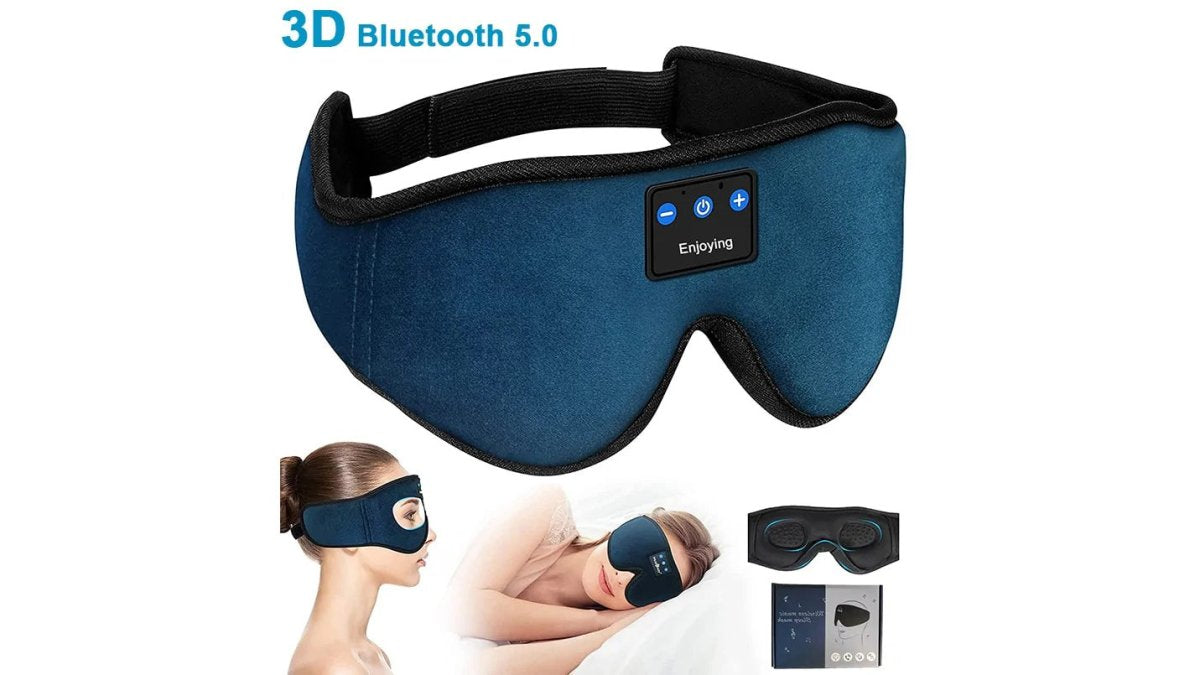
Our Sleep Eye Mask Headphones combine memory foam padding with breathable cotton and a shaped nose baffle, which covers the pressure and light-leak problems side sleepers hit most often.

Testing Methodology: How to Judge Pressure, Shifting, and Light Leaks
Testing a sleep mask for side sleeping means checking three things under real pillow pressure: eye pressure, strap shifting, and light leaks.
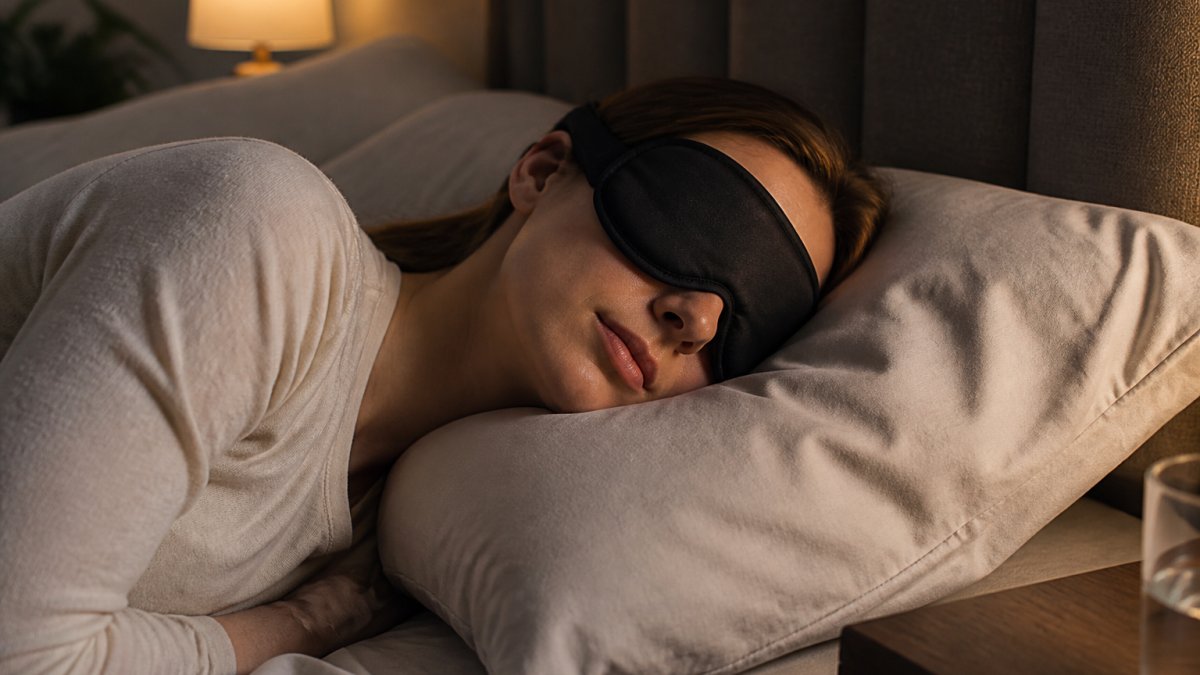
Here is the protocol we use, and the one we would recommend to any side sleeper comparing masks:
- Pressure test on each side: Lie on your left side for ten minutes with your full head weight on the pillow, then repeat on your right. Any sensation of contact on the eyelid is a fail. Note whether the pressure is on the brow, the cheekbone, or the eye socket, because socket pressure is the one that causes morning puffiness.
- Pillow-height check: Repeat the pressure test with your usual pillow and then with a thinner pillow. A mask that clears your lashes on a thin pillow may press into the eye on a thick one, because the pillow angle changes how the mask sits on your face.
- Lash clearance: Blink slowly several times on each side. If your lashes brush the interior, the cups are too shallow for side sleeping. This is the single most common failure point for masks marketed as contoured.
- Shift test: Roll from side to side five times and measure how far the mask has moved from its starting position. A shift of more than about a finger's width means the strap or side panels are not gripping well enough for a full night.
- Leak test on each side: With a lamp on, check the nose bridge and the outer corner of the eye while lying on each side. Then roll onto your back and check again, because a mask that seals on your side may leak at the nose when you roll onto your back.
- Strap check: After twenty minutes, note whether the strap has loosened or left a mark on your temple. A strap that leaves a mark within twenty minutes will leave a deeper mark by morning.
- Heat check: Notice whether the area under the mask feels damp or warm, which signals poor breathability. Pay attention to the side pressed into the pillow, because that is where heat builds up first.
Run the same seven checks on every mask you try for a fair comparison rather than a first-impression guess.
What most guides miss is that pressure and light leakage are linked. A mask that presses into your eye also lifts at the edges, so fixing the fit usually fixes the blackout problem at the same time.
Pillow firmness is a second overlooked variable.
Common Mistakes Side Sleepers Make When Buying a Sleep Mask
The most common mistake is buying a flat mask because it looks comfortable in the photo. Flat masks have no structure to resist a pillow, so they compress onto the eye within minutes.
Second is ignoring temple coverage. A mask that stops short of the temple leaves a light gap that only shows up once you are on your side. Buyers often blame the fabric when the real issue is width.
Third is choosing on price alone.
Fourth is skipping the washability question. A mask you wear every night needs regular cleaning, and hand-wash-only silk gets skipped. Check the care instructions before you buy, not after.
Fifth is assuming one mask suits every sleeper in the house. A back sleeper and a side sleeper need different shapes, so a shared mask usually suits neither.
Conclusion
Finding a mask that survives a full night on your side comes down to three specifications: contoured cups deep enough to clear your lashes, a wide adjustable strap that holds its position, and side panels that reach the temple. Get those right and light leaks and morning pressure marks largely disappear.
At My Bennu, we look for sleep accessories that solve a real problem rather than adding a gadget. Our Sleep Eye Mask Headphones pair memory foam padding and contoured eye space with a nose baffle and an adjustable strap, and built-in Bluetooth audio means you can skip earplugs entirely. Browse the sleep range and check the specifications against the tests above before you commit.
Frequently Asked Questions
What is the best type of sleep mask for side sleepers?
A contoured sleep mask with deep 3D eye cups and a wide, adjustable strap is the best fit for side sleepers. The contoured shape keeps fabric off your eyelids and lashes, so pillow pressure doesn't push the mask into your eyes. Look for a light-blocking design with a nose baffle to seal gaps, and a strap that sits flat against the back of your head so it doesn't shift when you roll. A sleep mask that stays in place all night is the one you'll actually keep wearing.
How do I stop a sleep mask from pressing into my face when I sleep on my side?
Switch to a contoured sleep mask with molded eye cups. Flat masks collapse against your face under pillow pressure, which is what causes the pressing feeling. A contoured design holds its shape, so the fabric sits away from your eyes and lashes. Also check strap tension: a strap that's too tight will dig in when your cheek meets the pillow. Adjust it so the mask stays put without leaving marks, and try a silk sleep mask if you're sensitive to texture.
Are contoured sleep masks comfortable for side sleepers?
Yes, for most side sleepers they're more comfortable than flat masks. The contoured sleep mask uses raised eye cups that create space around your eyes, so nothing presses on your eyelids or lashes. That space also helps with light blocking because the cups form a seal around the eye area. Comfort depends on fit: the cups should sit around your eyes, not on them, and the strap should be snug but not tight. If you have a smaller face, look for a lower-profile contoured design.
Do silk sleep masks work well for side sleepers?
A silk sleep mask can work well if it has a contoured shape or a stable strap. Silk is smooth and breathable, which helps hot sleepers and people with skin sensitivity. The downside is that flat silk masks can slide against the pillow and shift during the night. Pair silk with a wide adjustable strap and a contoured eye cup design, and you get the cooling feel of silk plus the stability side sleepers need. Wash silk by hand to protect the fabric.